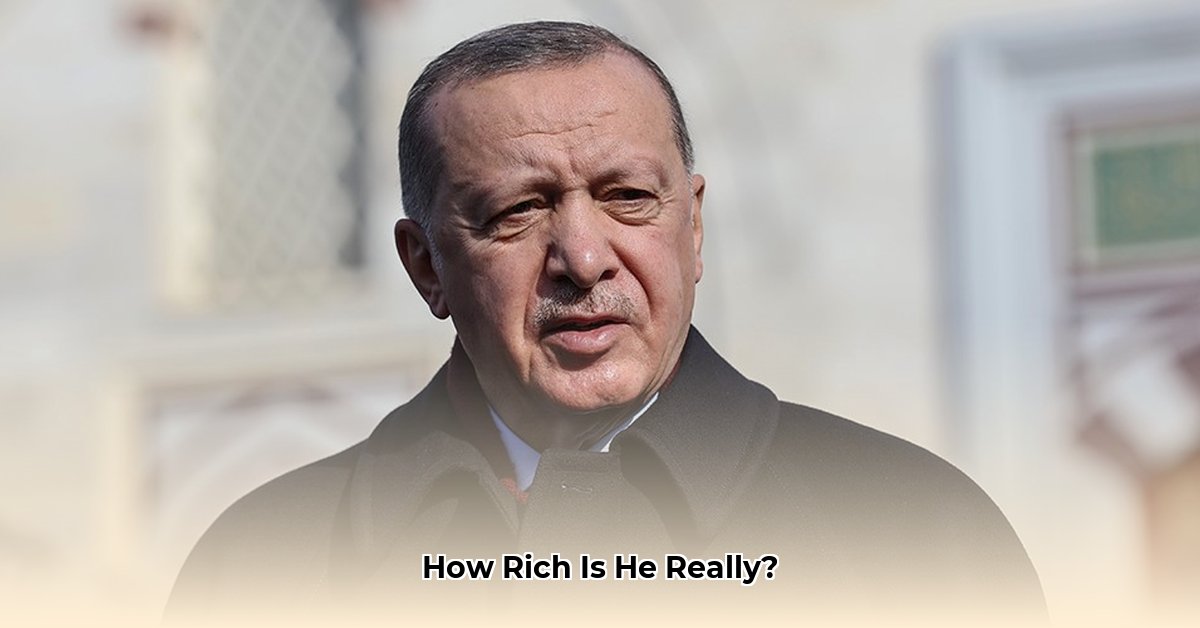
Unveiling Erdogan Net Worth (2024): Turkish Billionaire Insights & Global Leader Wealth
August 28, 2025 · 7 min · 1438 words · Maureen Burke
# Unveiling Erdogan Net Worth (2024): Turkish Billionaire Insights & Global Leader Wealth

Okay, so trying to figure out how much money powerful people have is super tricky, right? Especially when we're talking about someone like the President of Turkey, Recep Tayyip Erdogan. It's not like they just hand over a bank statement! Things get even more complicated because Turkey's economy has a lot of moving parts, and figuring out who owns what can be a real headache. That's why we're diving into the question of "Exactly how much money does Erdogan have?" We're going to look at how it compares to other super-rich folks in Turkey and around the world. Think of it as a detective story about money, where we'll explore what we *do* know, what we *don't* know, and how you can avoid some common mistakes when trying to understand wealth like this. You can see how others compare, like [David Zalman's net worth](https://david-zalman-net-worth.pages.dev).

## Erdogan Net Worth: Unveiling the Wealth of a Global Leader & Financial Standing

Estimating the Erdogan net worth is a complex task, shrouded in speculation and limited access to transparent financial data. This raises an intriguing question: how does his financial standing compare to other prominent figures on the global stage, as well as the wealthiest individuals within Turkey? Let's explore this topic by examining the available information and considering the challenges involved in assessing the wealth of a political leader, while searching for transparency and access to accurate financial data.

### The Elusive Nature of Wealth Estimation & Financial Records

Determining the precise net worth of politicians is notoriously difficult. The primary reason for this is the often restricted access to their financial records. Economic systems' complexities and the lack of complete transparency further complicate the matter. Consider, for instance, the widely varying estimations of Vladimir Putin's wealth, which some assess to be as high as $200 billion, compared to Joe Biden's reported $10 million. This vast difference underscores the different approaches to wealth accumulation and the varying levels of transparency across different countries.

Similarly, when examining the Erdogan net worth, estimates frequently circulate around the $500 million mark. However, unlike the readily available financial details of some Turkish business magnates, concrete information about President Erdogan's financial portfolio is not publicly accessible. This lack of transparency naturally prompts questions and concerns regarding financial portfolios and accessibility.

### Sources and Strategies: Tracing Wealth Origins & Political Connections

The strategies employed by world leaders to amass wealth vary considerably. In nations rich in natural resources, such as Azerbaijan and Equatorial Guinea, leaders often benefit significantly from their control over the oil and gas industries. In contrast, Srettha Thavisin of Thailand made his fortune in the real estate sector before venturing into the world of politics.

Regarding the Turkish president, speculation suggests that his wealth may be linked to family-owned businesses, real estate investments, and his extensive network of political connections. However, it is important to note that solid, verifiable evidence regarding these potential sources remains elusive. What are the key verifiable sources?

### Regulatory Loopholes: Facilitating Opaque Wealth and Anti-Corruption Laws

The inadequate enforcement of anti-corruption laws and the existence of opaque financial systems can create an environment in which illicit wealth can flourish. This prompts the question: how can a more effective and transparent system be implemented? International organizations such as the Financial Action Task Force (FATF) play a crucial role in setting global standards for financial transparency. However, the true effectiveness of these standards hinges on their rigorous implementation at the national level. Countries with robust regulatory frameworks, such as Canada and Singapore, demonstrate a greater commitment to transparency. However, significant challenges persist in nations where governance is weaker.

### Actionable Steps for Promoting Greater Transparency & Political Leaders

To address these challenges and promote greater transparency, several steps can be taken by various stakeholders:

1.  Investment Firms:
    *   Step 1: Conduct more thorough due diligence (investigation) when considering investments in countries known for their opaque financial systems.
    *   Step 2: Develop risk models that specifically take into account political instability and the potential for sanctions, which can significantly impact asset values.

2.  Policy Makers:
    *   Step 1: Work to improve global financial transparency standards for political leaders.
    *   Step 2: Establish international mechanisms designed to investigate and penalize the illicit accumulation of wealth by public figures.

3.  Civil Society Groups:
    *   Step 1: Advocate for increased disclosure of assets by political leaders and greater scrutiny of the sources of their wealth.
    *   Step 2: Support investigative journalism and research efforts aimed at uncovering hidden wealth and exposing corruption networks.

### The Turkish Context: A Deeper Examination & Foreign Investments

Turkey's unique economic landscape adds another layer of complexity to the question of Erdogan net worth. While Forbes publishes a list of the wealthiest individuals in the country, determining the president's net worth requires a more in-depth investigation. Organizations like Transparency International have voiced concerns about potential conflicts of interest and the perceived lack of accountability. This situation highlights the critical need for enhanced due diligence when considering foreign investments in Turkey. A key question to consider is the extent to which any wealth has been acquired legitimately, as opposed to the result of corruption or the abuse of power.

Here's a summary of actionable steps that different stakeholders can take, both in the short and long term:

| Stakeholders         | Short-Term (0-1 Year)                                                                                           | Long-Term (3-5 Years)                                                                                                                                                                    |
| -------------------- | -------------------------------------------------------------------------------------------------------------- | -------------------------------------------------------------------------------------------------------------------------------------------------------------------------------------- |
| Investment Firms     | Intensify due diligence procedures for investments in nations characterized by opaque financial systems.           | Formulate risk assessment frameworks that incorporate the potential effects of political unrest and sanctions on asset values.                                                    |
| Policy Makers        | Enhance global norms for financial transparency applicable to political leaders.                                 | Establish international structures to probe and penalize the unlawful buildup of wealth by individuals in public roles.                                                               |
| Civil Society Groups | Push for greater openness regarding the assets held by political figures and more rigorous scrutiny of wealth origins. | Promote investigative reporting and scholarly work to reveal concealed wealth and networks involved in corruption.                                                               |

## How Wealth Impacts Turkish Politics & Undermines Transparency

Key Takeaways:

*   Erdogan's ascent reflects the intricate link between political career and financial activities.
*   Strategic real estate investments and diverse business partnerships mark his financial undertakings.
*   Family involvement in ventures prompts concerns about conflicts of interest, and political connections.

### Erdogan's Financial Rise: A Political Trajectory & Financial Success

Recep Tayyip Erdoğan's transformation from Istanbul's modest beginnings to a dominant figure illustrates how wealth impacts Turkish politics. His enduring political career, spanning multiple terms as both Prime Minister and President, reveals intertwined public duties and personal gains. Shouldn't political power and financial success remain distinctly separate to enhance transparency?

### Strategic Investments and Family Ties & Business Partnerships

A key aspect of Erdogan’s accumulation involves strategic investments, notably in real estate – his wife, Emine Erdoğan, is reported to play a crucial role in managing these assets. Beyond real estate, Erdogan fostered business partnerships in sectors like energy and technology, aligning personal gain with Turkey’s interests. How does this blend of personal enrichment and national strategy play out with diverse business partnerships?

The involvement of his family, such as his son-in-law's satellite business coinciding with Turkey's space ambitions, exemplifies this strategy. Is this mere coincidence, or calculated synergy related to his political connections?

### Controversies and Scrutiny Surrounding Erdogan's Wealth & Lack of Transparency

However, Erdogan's fiscal journey isn't without controversy. Allegations of misusing political clout for personal enrichment have emerged, citing favoritism and a lack of transparency. Do these claims hold merit, and what facts support the allegations?

Critics point to infrastructure projects and economic reforms purportedly favoring close associates. Family-owned enterprises in energy, construction, and telecommunications have seen significant growth during Erdogan's tenure, raising questions about political connections. What’s the real impact of these connections in the business landscape?

The annual list of highest-paid political figures fuels the debate, highlighting substantial earnings from stock investments, property, endorsements, and ventures. But how accurate are these claims regarding property and endorsements?

### Stakeholders' Role: Promoting Accountability and Independent Audits

In response to these complexities, it's time to ask ourselves, what role do we play in the process of accountability?
Journalists should conduct independent audits and investigate links between family enterprises and policies. Political watchdogs must monitor financial dealings, advocating for transparency. Citizens, in turn, should demand accountability. By understanding Erdogan's wealth, we can push for transparency and foster a more balanced understanding of the factors contributing to his financial standing.

[Citation: https://blibliajah.com/richest-politicians/presidents/recep-tayyip-erdogan-net-worth/]